
I’ve eaten my way through Rome many times, from small, family-run restaurants on side streets to more upscale, tourist-friendly places with famous names and English menus. I also know what it’s like to plan trips on a budget, looking for cheap places to eat in London, budget restaurants in London, and even making lists of cheap places to eat in London in 2026. So let’s be honest and talk in plain language about the differences between Jamie-style restaurants and real Roman trattorias.
Understanding the Difference: Chain Restaurants vs. Local Trattorias
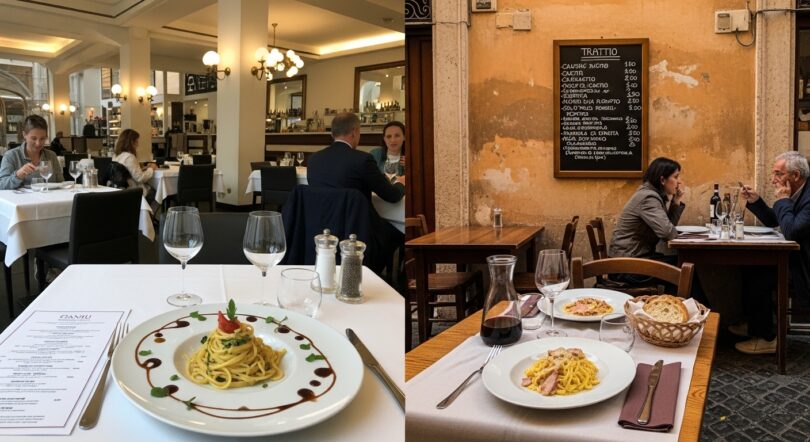
Jamie’s Italian and Celebrity-Style Dining
Let’s be clear before we compare.
Jamie opened Italian restaurants in a number of countries, including:
A big, famous name (Jamie Oliver)
Rooms that are modern and stylish
Dishes that are Italian but with a British twist
Menus in English that are easy to read
Some branches have closed, some have reopened in new forms, and you may still find Jamie-branded or Jamie-inspired places when you travel. The idea is the same: “easy to make good, honest Italian food.”
Traditional Trattorias in Rome
A trattoria is a simple Italian restaurant, usually run by a family. They are everywhere in Rome.
You will often see:
Small rooms with tables made of wood
Not white tablecloths, but paper place mats
A short menu of local foods
Older people or families own or run the place.
This is where a lot of locals eat, even though it doesn’t look fancy.
Dining Atmosphere: Tourist-Friendly vs. Local Experience
Jamie-Style Restaurants – Comfortable and Familiar
In a Jamie-style restaurant, the mood is usually
Modern and full of life
With lots of bright colors and fun decorations
Employees who speak English well
Menus that are easy to read and friendly
You often feel like you’re in a “global” place, not just one city. For tourists who don’t speak much Italian, it can feel safe and easy.
Roman Trattorias – Authentic and Lively
In a real Roman trattoria, the mood is often
A little bit noisy and warm
Simple decorations, maybe a TV in the corner, and old pictures on the wall
Some staff members may be able to speak English, but not always well.
Menus can be shorter and even written by hand at times.
It feels like you’re in someone’s home, not a chain. It may not be as polished, but it feels more real.
A Jamie-style place is easier if you want comfort and familiarity.
A trattoria is the best place to go if you want to feel like you’re really in Rome.
Food Comparison: Modern Italian vs. Traditional Roman Cuisine
Jamie-Style Italian Food
This is the main one.
A lot of the time, dishes are
A little bit of everything, but mostly Italian
Plated in a modern way, with extra herbs, sauces, or other things
Very welcoming to people who haven’t tried Italian food before
You might see:
Pasta with a lot of different sauces and toppings mixed in
Big salads, garlic bread, and “super food” meals
Pizzas with interesting toppings
Tiramisu, brownies, and cheesecakes are all desserts.
If you’re from the UK or northern Europe, it tastes good and feels familiar. But it might not be what a Roman grandma would make.
Authentic Roman Trattoria Dishes
Food from Rome is simple but tasty. You will often see:
Cacio e pepe is pasta with only black pepper and pecorino cheese.
Amatriciana is a sauce made with tomatoes, guanciale (cured pork), and pecorino.
Egg, cheese, guanciale, and black pepper make up carbonara (no cream if it’s real Roman!)
Saltimbocca alla romana is veal with ham and sage.
Carciofi are artichokes that can be fried or cooked in the Roman style, depending on the season.
Desserts can be easy:
Tiramisu
Panna cotta
A piece of tart
The flavors are strong but not too strong. The menu may not have a lot of options, but that’s because they do a few things very well.
If you want “safe” Italian food that tastes like a chain restaurant back home, Jamie’s style is fine.
A trattoria is the best place to go if you want real Roman food.
Price Comparison: Where Do You Get Better Value in Rome?
You care about more than just price if you often look for “budget restaurants London” or plan around “affordable dining London” back home.
Jamie-Style Restaurants – Mid-Range Pricing
Prices are often:
Like mid-range restaurants in big cities
You pay partly for the name and the way the place looks.
It doesn’t take long for appetizers, main courses, desserts, and drinks to add up.
You might feel:
Safe to order, but the bill can seem high compared to small local places.
You could be in any big city, not just Rome.
Local Trattorias – Better Value for Authentic Food
Prices can be:
Very fair, especially if you stay away from the main tourist areas.
Less expensive at lunch or with set menus
Good price for house wine by the carafe
You might feel:
You get more “Italy” for your money.
In London or Paris, a plate of pasta and a glass of wine cost less than a chain restaurant.
In general, a good trattoria is a better place to get local food than a big chain.
How to Spot a Tourist Trap in Rome
Not every chain is bad, and not every place that looks like a local one is good. The real question is whether it’s a tourist trap or not. These are easy signs.
Signs of a Tourist-Focused Restaurant
Big menu with pictures of every dish in ten different languages
Staff outside waving you in
Prices are a lot higher than on nearby streets.
Instead of local dishes, focus on “menu for tourists.”
Signs of an Authentic Local Trattoria
A short menu that is only in Italian (or Italian and one other language) at times
A board shows the daily specials.
People from the area eat there, not just tourists.
The staff is busy serving, not begging you to come in.
Jamie doesn’t usually run “scams” at her Italian-style places, but she does make sure they are safe for tourists. It could be good or bad, depending on what you want.
Travel Style Choice: Comfort vs. Local Adventure
If you’re used to cheap food in London or chains all over Europe, it can be easy to walk into a well-known restaurant in Rome.
You might want to go with Jamie if:
You are worried about trying new foods.
You don’t speak Italian and you’re shy.
You are very tired and only want something quick and easy.
You could pick a trattoria if:
You want to feel like a local.
You don’t mind guessing a little bit of language.
You want to eat real Roman food, not just “Italian-style” food.
When I go on a short trip, I like to mix comfort and adventure. One night I’ll go to a safe, easy restaurant, and the next night I’ll go to a local place.
Budget Tips for Eating Well in Rome
You don’t have to spend a lot of money to eat well in Rome, just like you don’t have to spend a lot of money to find good cheap food in London.
1. Walk Away from Major Tourist Areas
Prices go up near the Colosseum, Trevi Fountain, or Vatican.
Take a 5–10 minute walk down side streets.
Find places where there are more locals than tourists.
2. Check for Service Charges (Coperto)
Some restaurants also add:
Coperto: a small fee for each person.
Service is sometimes included and sometimes not.
It should be on the menu. If you’re not sure, just ask, “Is service included?”
3. Choose House Wine and Simple Drinks
House wine (vino della casa) is usually good and cheap.
Bottled still water costs more than tap water.
Some places let you drink tap water, but others don’t. Say “Acqua del rubinetto?” in a polite way.
4. Look for Lunch Deals
A lot of trattorias:
Have lunch menus that are cheaper and set.
Give customers a deal on pasta and a drink.
Then you can have a lighter, cheaper dinner, like pizza by the slice.
5. Mix Markets, Bakeries, and Restaurants
Have breakfast at a bakery.
For lunch, get a panino (sandwich) or a piece of pizza.
Only go to the trattoria at night.
This is like planning for cheap food in London in 2026: you choose where to spend more and where to save.
Final Recommendation: Jamie’s Italian or Local Trattoria?
What I really think:
It’s fine to go to a Jamie-style restaurant for one “easy” meal where you don’t want any surprises.
Going to local trattorias will give you more joy, more stories, and a more authentic experience of Rome for the rest of your meals.
You traveled all the way to Italy. It’s better to eat in places that feel like Italy than in places that feel like any other chain.
You can see why people love this city when you sit in a small trattoria, hear Italian all around you, and eat a simple plate of carbonara made the old way. It’s nice to have a famous TV chef’s name, but that feeling is different.
Final Thoughts: Tourist Trap or Authentic Experience?
So, is Jamie’s Italian a tourist trap or a real Italian restaurant in Rome?
Places like Jamie’s aren’t always bad, but they are mostly made for tourists and comfort.
Trattorias in Rome can be a little messy, a little loud, and the English may not be perfect, but that’s where the heart of the city is.
If you want real food and real stories, go to trattorias most of the time. Only go to chain-style places when you really need that safety net.
In Rome, do the same thing you would do in your own city: look for cheap places to eat or stay away from obvious tourist traps. Trust the small streets, short menus, and people at the next table. There is where you’ll have the best meals and make the best memories.
Frequently Asked Questions About Dining in Rome
1. Is Jamie’s Italian a tourist trap?
Not always a “trap,” but it is mostly for tourists and people who like safe, familiar food. A local trattoria is usually better for a real Roman experience.
2. Are local trattorias cheaper than chain restaurants?
Yes, many local trattorias offer better prices, especially away from tourist hotspots.
3. How can I identify an authentic trattoria?
Look for short menus, local customers, daily specials, and no aggressive staff inviting you in.
4. Do I need to speak Italian?
Not necessarily. Basic words and gestures are usually enough to communicate.
5. What is the best way to eat on a budget in Rome?
Mix bakeries, markets, and trattorias, and focus on simple, local dishes to save money while enjoying authentic food.