
When you walk through Berlin today, you can see how German Chefs Are Transforming Berlin’s Modern Food Scene. The city is no longer only about heavy sausages, big stews, and late‑night kebabs. Now you find bright, fresh plates, creative ideas, and relaxed places where good food feels fun, not stiff or scary.
In this article, I’ll take you behind the scenes. I’ll share what I have seen and tasted in Berlin kitchens, in small side streets, and in busy markets. We will look at what these new chefs are doing, where to try their food, and how to enjoy it even on a small travel budget.
Berlin’s Food Story: From Heavy Meals to Fresh, Modern Plates
For a long time, many people thought German food was always:
- Meat and potatoes
- Thick sauces
- Very big portions
You can still find this in Berlin, and it can be very tasty. But today, the city’s food scene is much wider.
Modern Berlin food can be:
- Light and fresh
- Mostly vegetables
- Full of herbs and colour
- Mixed with ideas from around the world
The city has gone through many changes in the last 30–40 years. The food has changed with it. Young chefs, open borders, and new markets all helped build this new wave.
Who Are These New German Chefs?
The chefs changing Berlin now are not all the same. But they share some common traits.
Young, Curious, and Well Trained
Many worked:
- In classic German restaurants
- In French or Nordic kitchens
- In London, Copenhagen, or Paris for a few years
They learned strong skills. Then they came back to Berlin with new eyes and new ideas.
Proud of Local Food
They want to use:
- German vegetables
- Fish from nearby rivers and seas
- Bread from small Berlin bakeries
- Cheese and meat from local farmers
They care about where food comes from, not just how it looks on a plate.
Open to World Flavours
Berlin is full of people from Turkey, Vietnam, Syria, Italy, and more. Chefs eat in these places too. They mix:
- German roots
- World spices
- New cooking styles
This is one big reason German Chefs Are Transforming Berlin’s Modern Food Scene so fast and in such an exciting way.
How German Chefs Are Transforming Berlin’s Modern Food Scene
Right now, German Chefs Are Transforming Berlin’s Modern Food Scene in many clear ways. Let’s look at the most important ones.
1. Local and Seasonal Come First
Many modern Berlin menus are short. They change often. This is because chefs now plan around:
- What is in season
- What local farmers bring that week
In spring, you might see:
- White asparagus
- Young carrots
- Fresh herbs
In autumn, you might taste:
- Mushrooms from nearby forests
- Root vegetables
- Game meat
This gives better taste and helps small farms.
2. Old Dishes, New Style
Chefs love classic German foods, but they give them a fresh twist.
For example:
- Pork knuckle made smaller and cooked slower, so it is softer and lighter
- Sauerkraut served as a crisp salad with herbs
- Potato dishes with bright sauces instead of only heavy gravy
The flavours feel both new and familiar at the same time.
3. More Plant-Based and Vegetarian Options
In Berlin, many people are vegetarian or vegan, or just eat less meat. Chefs respond to this.
They create:
- Whole menus based on vegetables
- Main dishes with beetroot, celeriac, or cabbage as the “star”
- Vegan sauces and desserts that still taste rich and full
You can go to a top restaurant and never miss the meat.
4. Less Waste, More Respect
Many Berlin chefs now think hard about waste. They try to use:
- All parts of a vegetable
- Bones and trimmings for stock
- Leftover bread for crumbs or desserts
This is good for the planet and gives deeper flavours. It also shows respect for the work of farmers and the cost of food.
5. Casual Fine Dining
In Berlin, “fine dining” does not always mean white tablecloths and quiet rooms. You can find:
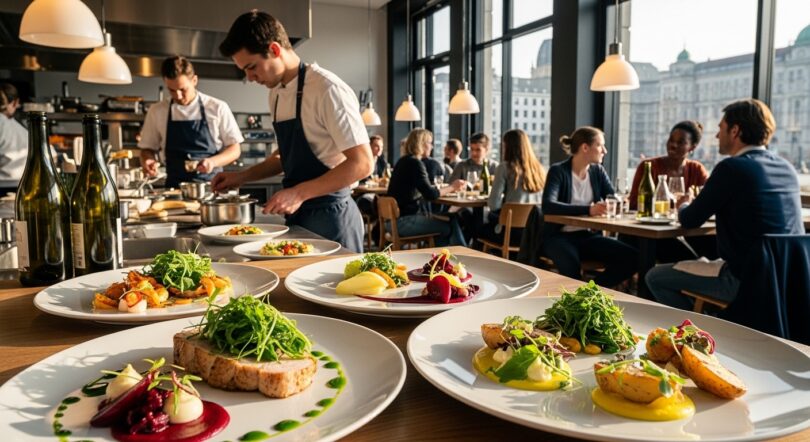
- Open kitchens
- Loud music
- Staff in simple clothes
But on your plate, you still get:
- Careful cooking
- Clean, pretty plating
- Thoughtful menus
This mix of relaxed style and high‑level food is a big part of the new scene.
Types of Places Where You Can Taste the New Berlin Food
You do not need to know every restaurant name. It helps to understand the types of places and the areas to look in.
Modern Bistros in Kreuzberg and Neukölln
In these neighbourhoods you will find:
- Small bistros with daily menus
- Natural wine bars with short food lists
- Spots that mix German and world ideas
You might have:
- A few small plates to share
- One main dish
- A simple dessert
Prices vary, but many are still fair compared to other big capitals.
Neo-Trattorias and Fresh German Kitchens in Mitte
In Mitte, some restaurants look quite sleek but still focus on taste, not just looks. They may serve:
- New versions of German classics
- Clean, light pasta or fish dishes
- Menus that change each week
They often use open kitchens, so you can watch the action.
Creative Vegan and Vegetarian Places in Friedrichshain and Prenzlauer Berg
These areas are great if you do not eat meat. You can find:
- Vegan fine dining menus
- Casual spots with strong vegetable plates
- Bakeries with plant‑based cakes and buns
Even meat‑eaters come here because the food is that good.
Can You Enjoy Modern Berlin Food on a Budget?
Yes, you can. Berlin is still kinder to your wallet than many other capitals.
If you are from the UK or Europe and already follow guides for cheap eats in London or know where to find the best budget restaurants London has, you will feel at home in Berlin too.
Here are ways to taste this new scene without spending too much.
1. Choose Lunch Menus
Many modern restaurants offer:
- Cheaper set menus at lunch
- Fewer courses for a lower price
You still get:
- The same kitchen
- The same chef
- A clear idea of their style
But your bill is smaller than at dinner.
2. Look for Daily Specials and “Mittagstisch”
“Mittagstisch” means “lunch table” in German. Many places:
- List a daily dish on a board
- Offer soup or salad plus a main for a set price
These are often very good value and show the chef’s current ideas.
3. Mix High and Low
Plan like this:
- One or two special meals in modern bistros
- The rest in simple places: bakeries, kebab shops, noodle bars
Berlin still has great cheap snacks and classics like currywurst and döner. Mix them with modern meals to keep costs low.
4. Share Plates
If portions are generous:
- Share starters
- Order one dessert for the table
You taste more dishes without doubling the price.
Berlin vs London for Budget Food Lovers
Many travellers plan both cities in one trip. They read about affordable dining London and then look at Berlin prices to compare.
In general:
- Berlin is cheaper for sit‑down meals in many areas
- London has more world food choice, but some parts are costly
- Both have strong street food scenes
When people talk about cheap food London 2026, they often say, “London is getting more expensive.” At the same time, Berlin still has many good meals under €15 if you know where to look.
So you might:
- Spend a bit more on food in London
- Enjoy slightly lower prices in Berlin
- Use smart planning to enjoy both
Practical Tips for Budget Travelers in Berlin
Here are simple tips that helped me enjoy the new Berlin food without breaking the bank.
1. Use Bakeries for Breakfast
Berlin bakeries sell:
- Fresh rolls
- Pretzels
- Simple sandwiches
- Sweet pastries
You can grab breakfast for a few euros and save money for a nice lunch.
2. Drink Tap Water
Tap water in Berlin is safe. Ask for tap water with your meal. Fill your own bottle during the day instead of buying plastic bottles again and again.
3. Stay One Street Away from Big Sights
Right next to big sights, prices go up and quality can drop. Just like in London, where the best cheap eats in London are often a few streets from the main spots, in Berlin you should:
- Walk a little away from Brandenburg Gate, Museum Island, or Alexanderplatz
- Look for small places with local guests and simple signs
4. Use Public Transport Smartly
Berlin’s trains and trams are easy to use. You can stay in a cheaper area with good local food and ride into the centre for sights. This lets you eat where locals eat, often for less money.
5. Check Menus Online Before You Go
Most restaurants share:
- Menus
- Prices
- Photos
online. Check before you visit. This helps you stay on budget and avoid surprises.
Internal Linking Ideas for Your Website
To help your readers move around your site, you can add links like:
- “If you’re also stopping in the UK, start with our full guide to [affordable dining London] before flying to Berlin.”
- “For another big city food guide, don’t miss our [cheap eats in London near top attractions] article.”
- “Planning a full Europe trip? Check our [best budget food cities in Europe] post.”
- “Vegetarian travellers should also read our [Berlin vegan restaurants on a budget] guide.”
- “For long‑term planning, see our [cheap food London 2026 and beyond] breakdown.”
You can replace the bracketed parts with your real URLs once those articles are live.
Conclusion: A City Changing, One Plate at a Time
Berlin is now one of the most exciting food cities in Europe. At every level, you can feel how German Chefs Are Transforming Berlin’s Modern Food Scene. They honour old dishes, use local farms, and welcome world flavours. They cook in fancy rooms and in small bistros, in quiet streets and busy markets. With a bit of planning, you can enjoy this change, even if you travel on a budget and usually hunt for cheap food guides for other cities. As you eat your way around Berlin, from bakeries to modern kitchens, you will see with your own eyes how German Chefs Are Transforming Berlin’s Modern Food Scene.
FAQs: How German Chefs Are Transforming Berlin’s Modern Food Scene
1. What does it mean that German chefs are transforming Berlin’s modern food scene?
It means that many new and experienced German chefs in Berlin are changing how the city eats. They use local, seasonal ingredients, give classic dishes a fresh twist, offer more vegetarian options, and create relaxed fine dining spaces. Together, they are making Berlin’s food more modern, creative, and open.
2. Is Berlin still a good city for cheap food?
Yes. Berlin is still one of the better big cities in Europe for cheap food. You can find low‑cost options like kebabs, currywurst, bakery snacks, and simple lunches. At the same time, there are many modern restaurants with fair prices compared to other capitals.
3. Can vegetarians and vegans enjoy the new Berlin food scene?
Absolutely. Many of the chefs changing Berlin’s food scene focus on vegetables. There are full vegan restaurants, vegetarian tasting menus, and lots of plant‑based dishes in mixed menus. Berlin is known as a very friendly city for non‑meat eaters.
4. How can I eat at modern Berlin restaurants on a budget?
To eat at modern places on a budget, try set lunch menus, look for daily “Mittagstisch” offers, share plates, and mix one or two special meals with cheaper days at bakeries, markets, and street food stalls. Checking menus and prices online before you go also helps you stay on budget.
5. How does Berlin compare to London for food travellers?
Both cities are great for food lovers. London has a huge choice and strong guides for budget restaurants London and fine dining. Berlin is often cheaper for sit‑down meals and has a fast‑growing modern scene powered by local German chefs. Many travellers enjoy visiting both, using smart planning to balance costs between the two.