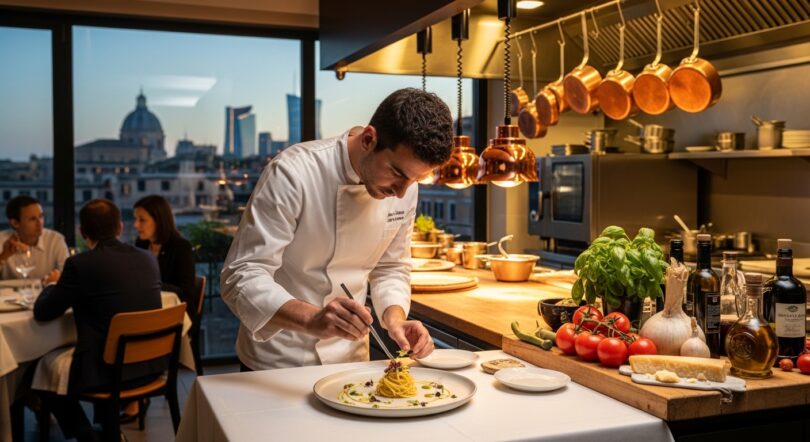

Top Italian Chefs Redefining Fine Dining in Rome and Milan explore Michelin-starred innovation, modern Italian cuisine, luxury restaurant experiences, and the culinary vision shaping Italy’s top dining destinations.
Italian food is loved all over the world. From simple pasta dishes to perfect pizza, Italy has shaped the way the entire planet eats. But something exciting is happening right now in the kitchens of Rome and Milan. A group of incredibly talented Italian chefs redefining fine dining are changing the way we think about Italian cuisine. They are taking the classic recipes their grandmothers taught them and adding new techniques, bold ideas, and creative presentations that push Italian food into the future. These chefs are earning Michelin stars, winning international awards, and proving that Italian cooking is so much more than just spaghetti and meatballs. And what is truly wonderful is that many of them also believe in keeping food accessible. Just like the affordable restaurants in London that serve world-class meals at honest prices, several of these Italian chefs have opened casual spots alongside their fine dining restaurants so that everyone can taste their cooking.
Let me introduce you to the chefs who are shaping the future of Italian fine dining.
Why Italian Fine Dining Is Changing
For a long time, fine dining in Italy followed strict rules. Classical French techniques dominated. Menus were formal. And many chefs were afraid to change traditional recipes because Italian food culture is so deeply respected.
But a new generation of chefs is breaking those rules — respectfully.
Here is what is changing:
- Innovation meets tradition. Chefs are using modern techniques like fermentation, sous vide, and molecular gastronomy while staying true to Italian flavours.
- Local ingredients are the stars. Instead of importing expensive products, chefs are celebrating hyper-local ingredients from specific Italian regions.
- Sustainability is a priority. Many top chefs are focusing on zero-waste cooking, ethical sourcing, and seasonal menus.
- Casual fine dining is growing. The stiff, formal dining experience is being replaced by warmer, more relaxed atmospheres — even at Michelin-starred restaurants.
- Storytelling through food. Each dish tells a story about Italy’s culture, history, and geography.
This is an incredibly exciting time for Italian food. And Rome and Milan are at the centre of it all.
Top Italian Chefs Redefining Fine Dining
1. Massimo Bottura — Osteria Francescana, Modena (With Influence Across Italy)
No conversation about modern Italian cuisine is complete without Massimo Bottura. While his legendary restaurant Osteria Francescana is in Modena, his influence stretches across Rome, Milan, and the entire world.
Bottura has been named the best chef in the world multiple times. His restaurant has earned three Michelin stars and has topped the World’s 50 Best Restaurants list.
What makes him revolutionary is the way he reimagines classic Italian dishes. His famous “Oops! I Dropped the Lemon Tart” looks like a dessert that fell on the floor — but it is a perfectly crafted masterpiece. His “Five Ages of Parmigiano Reggiano” presents one ingredient in five completely different textures and temperatures.
But Bottura is not just about fancy food.
His philosophy has inspired chefs across Italy — and across the globe — to think differently about what fine dining can be.
2. Heinz Beck — La Pergola, Rome (Three Michelin Stars)
Heinz Beck is a German-born chef who has made Rome his home for over 30 years. His restaurant, La Pergola, sits on top of the Rome Cavalieri hotel with breathtaking views of the Eternal City. It is the only three-Michelin-star restaurant in Rome.
Beck’s cooking is a beautiful fusion of Mediterranean flavours and modern technique. His dishes are light, elegant, and focused on health and wellness — something quite unusual in fine dining.
He uses science to understand ingredients better. He studies the nutritional properties of foods and creates dishes that are not only delicious but also genuinely good for you. His “fagottelli” — tiny pasta parcels filled with creamy carbonara sauce — have become one of Rome’s most iconic modern dishes.
What makes Beck special for the broader food community is his dedication to teaching and mentorship. He has trained dozens of young Italian chefs who have gone on to open their own successful restaurants. His influence on Rome’s dining scene is immeasurable.
3. Niko Romito — Reale, Castel di Sangro (With Presence in Rome and Milan)
Niko Romito is one of Italy’s most visionary chefs. His three-Michelin-star restaurant, Reale, is located in a remote former monastery in the mountains of Abruzzo. But his influence extends into Rome and Milan through his casual restaurant concept, Spazio.
Romito’s cooking philosophy is radical simplicity. While most fine dining chefs add more and more to their dishes, Romito takes things away. He strips dishes down to their purest essence. A single ingredient might be the entire focus of a course — a tomato, a piece of bread, a drop of olive oil — prepared in a way that reveals flavours you never knew existed.
His Spazio restaurants in Rome and Milan are particularly interesting for budget-conscious food lovers. They serve simplified versions of his fine dining concepts at much lower prices. A quality meal at Spazio costs a fraction of what you would pay at Reale. This approach mirrors what we see in London, where some of the best chefs have created affordable dining options alongside their premium restaurants.
Romito is also deeply committed to food education. He runs a culinary school called Accademia Niko Romito, where he trains the next generation of Italian chefs to cook with intelligence, respect, and creativity.
4. Viviana Varese — Viva, Milan (One Michelin Star)
Viviana Varese is one of Italy’s most important female chefs. Her restaurant Viva in Milan holds one Michelin star and is celebrated for its bold, emotional, and deeply personal cooking.
Varese’s journey has not been easy. As a woman in Italy’s male-dominated kitchen culture, she faced many challenges and prejudices. But she never gave up. Her resilience and talent have made her a role model for aspiring female chefs across Italy and Europe.
Her cooking draws from her roots in Southern Italy — Campania and Calabria. She uses bold Southern flavours like chilli, anchovies, and sun-dried tomatoes but presents them with modern elegance and artistry.
Varese is also a passionate advocate for social inclusion. She employs people from disadvantaged backgrounds in her kitchen and has used food as a tool for social change. Her story is as inspiring as her food.
5. Enrico Bartolini — MUDEC, Milan (Three Michelin Stars)
Enrico Bartolini runs MUDEC in Milan — one of the most exciting fine dining restaurants in Italy. It holds three Michelin stars and is located inside Milan’s Museum of Cultures, which makes the experience even more special.
Bartolini’s cooking is rooted in deep research and Italian regional traditions. He travels across Italy, studying forgotten recipes and local ingredients, and then reinterprets them with modern techniques.
His tasting menus are like a culinary journey through Italy. One course might celebrate Sicilian seafood. The next might honour Piedmontese truffles. Another might reinvent a Tuscan bread soup. Every dish has a story and a sense of place.
What makes Bartolini stand out is his incredible work ethic. He oversees multiple restaurants across Italy, yet the quality at each one remains outstanding. He is proof that passion and discipline can coexist at the highest level.
How Fine Dining Connects to Affordable Eating
You might wonder — what does fine dining in Italy have to do with eating on a budget? The answer might surprise you.
The innovations created by top Italian chefs redefining fine dining eventually influence everyday restaurants. Techniques trickle down. Standards rise. And the overall food culture improves — at every price level.
We see this clearly in London. The presence of world-class chefs has raised the standard of food across the entire city. Today, cheap eats in London are better than ever because the overall food culture has been elevated by fine dining innovation. The same is true in Rome and Milan.
Also, as mentioned earlier, several of these top chefs have opened more affordable restaurants where their philosophy and quality reach a wider audience. This is a trend we see in London too, where budget restaurants London offers allow everyday diners to experience food influenced by Michelin-level thinking.
Tips for UK Travellers Exploring Italian Fine Dining on a Budget
If you are a UK or European traveller planning a food trip to Rome or Milan, here are practical tips to experience fine dining without spending a fortune:
- Book lunch, not dinner. Almost every top restaurant in Italy offers a set lunch menu at 40% to 60% less than dinner prices.
- Try the casual spinoffs. Restaurants like Niko Romito’s Spazio offer fine dining philosophy at everyday prices.
- Visit during weekdays. Some restaurants offer quieter weekday specials that are more affordable.
- Ask about shorter tasting menus. Many restaurants offer a 3-course option alongside their longer (and more expensive) tasting menus.
- Eat street food for other meals. Save your budget for one special fine dining meal by eating affordable Italian street food like pizza al taglio, supplì, and panzerotti for your other meals.
- Explore Bib Gourmand restaurants. Italy has dozens of Michelin Bib Gourmand spots — restaurants recognised for excellent food at moderate prices.
Final Thoughts
Italy has always been a global leader in food. But the top Italian chefs redefining fine dining in Rome and Milan are taking things to a whole new level. From Massimo Bottura’s playful reinventions to Niko Romito’s radical simplicity to Viviana Varese’s bold Southern flavours, these chefs are proving that Italian cuisine is endlessly creative, deeply personal, and constantly evolving.
What makes their work even more meaningful is their commitment to making food accessible. Whether through casual spinoff restaurants, social projects, or culinary education, they are ensuring that the benefits of their innovation reach beyond the wealthy few. This same spirit drives the affordable restaurants in London scene, where great food is available to everyone regardless of budget.
Whether you are planning a special fine dining experience in Rome, a food adventure in Milan, or simply exploring the cheap food London 2026 has to offer, remember this — the best food in the world is made by people who genuinely love what they do. And love, as these chefs prove every single day, does not have a price tag.
Buon appetito! 🇮🇹🍽️
Frequently Asked Questions
Who are the top Italian chefs redefining fine dining in 2026?
The top Italian chefs redefining fine dining include Massimo Bottura (Osteria Francescana), Heinz Beck (La Pergola, Rome), Niko Romito (Reale), Viviana Varese (Viva, Milan), and Enrico Bartolini (MUDEC, Milan). Each chef brings a unique philosophy that blends Italian tradition with modern innovation and creativity.
What makes Italian fine dining different from other cuisines?
Italian fine dining is unique because it is deeply rooted in respect for ingredients and regional traditions. While French fine dining often emphasises complex techniques, Italian fine dining focuses on the quality of each individual ingredient. Modern Italian chefs are now combining this respect for simplicity with innovative techniques to create dishes that are both traditional and revolutionary.
Can you experience Italian fine dining on a budget?
Yes. Many top Italian chefs have opened casual, more affordable restaurants that offer their cooking philosophy at lower prices. Niko Romito’s Spazio restaurants are a great example. Additionally, most fine dining restaurants offer set lunch menus that are significantly cheaper than dinner. Italy also has many Bib Gourmand restaurants recognised for excellent food at moderate prices.
How do Rome and Milan compare for fine dining?
Both cities offer exceptional fine dining. Rome is home to La Pergola (three Michelin stars) and focuses on Mediterranean and classical Italian flavours. Milan has MUDEC and Viva, and tends to be more experimental and modern in its approach. Rome feels more traditional, while Milan pushes more boundaries. Both cities are essential destinations for any serious food lover.
What is the connection between Italian fine dining and affordable eating in London?
The innovations created by top chefs eventually influence the entire food culture of a city. In London, the presence of world-class chefs has helped raise standards at all levels, including at affordable restaurants in London and budget restaurants London offers. Many chefs also open casual spinoff restaurants, making high-quality food accessible to everyday diners. This trend exists in both Italian and British food scenes.